If you ask any modern AI tool to summarize the electric vehicle race or list the biggest smartphone brands, you will get a clean, polished answer in three seconds. The internet is flooded with news articles, earnings calls, and glossy reports about those popular topics.
But most real business decisions do not happen in glamorous tech categories.
Most founders, strategy leads, and every everyday market research analyst spend their time digging into unsexy, highly specific corners of the economy:
- What is the typical monthly lease rate for industrial automated freezer racks in the Midwest?
- How long does it take an orchard in Spain to break even on an automated fruit-picking robot?
- Who are the trusted local contractors inspecting commercial boiler safety valves in Ontario?
In tiny sectors like these, there are no neat "Top 10" listicles. The real facts are scattered across trade association PDFs, local government bidding portals, technical catalogs, and casual conversations in specialized Reddit forums. Conducting solid competitor research or field-level consumer research here is tricky.
No single AI tool does everything well. Instead of treating them as rivals, it helps to understand what each tool was actually built to do. Here is a calm, practical look at where ChatGPT, Perplexity, and ResearchMaster AI genuinely shine when you have to unpack an unfamiliar, obscure industry.
1. Where Each Tool Truly Shines
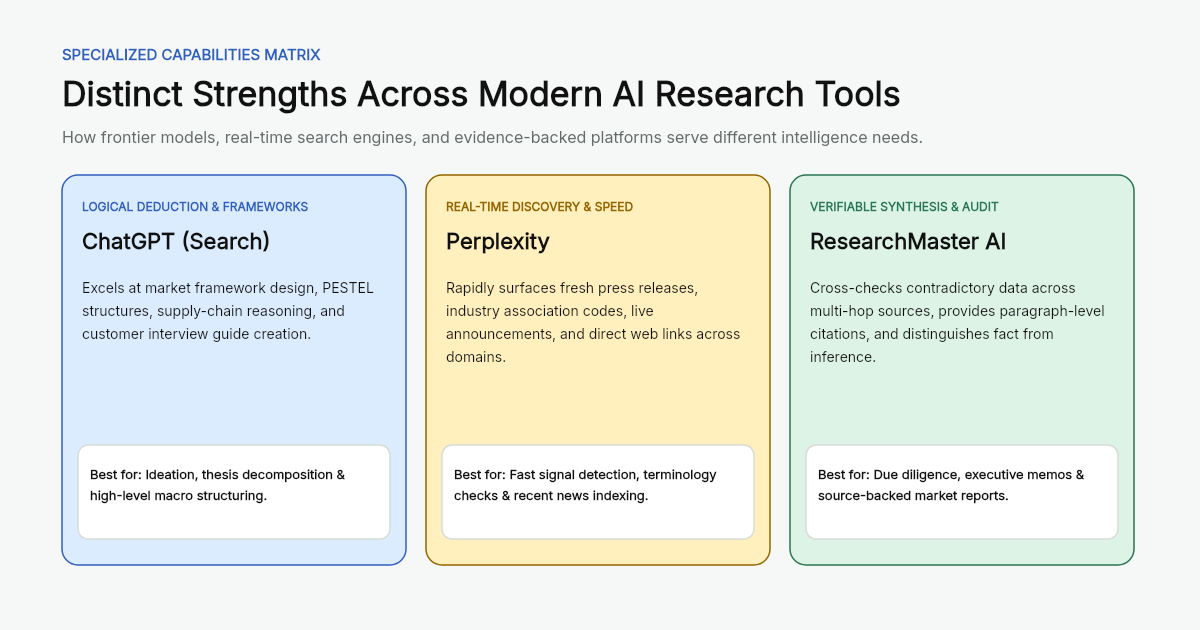 Figure 1: What each AI tool does best when you are digging into a specialized niche market.
ChatGPT (Search Mode): The Big-Picture Thinking Partner
Think of ChatGPT as your sharpest strategic sparring partner. It might not always know the exact phone number of a tiny supplier in Ohio, but it has an incredible grasp of how business economics work from first principles.
- Mapping out the supply chain: If you are totally new to a field like commercial refrigeration, ChatGPT can instantly map out the playing field: who makes the raw steel, who sells the cooling units, who leases the space, and where the big cost headaches usually hide.
- Drafting customer interview questions: When you need to get on the phone with a real warehouse manager, ChatGPT helps you prepare. It can simulate that manager’s daily headaches, giving you smart, natural questions about electricity bills and maintenance downtime before your live call.
- Turning messy jargon into plain English: If you paste in three pages of dense engineering regulations, ChatGPT is great at translating that technical alphabet soup into a clean summary that any CEO or board member can understand over coffee.
Perplexity: The Speedy Internet Scout
Perplexity feels less like a conversational philosopher and more like a lightning-fast research librarian with access to the live web.
- Finding actual public links in seconds: When you need to find an official safety bulletin, a specific OSHA rule number, or a local news article about a company opening a new depot, Perplexity surfaces direct web links much faster than clicking through Google results.
- Catching recent industry buzz: Because it prioritizes active web pages, it acts like a real-time monitor. You can quickly see recent press releases, conference announcements, or merger whispers without digging through bloated PR websites.
- Deciphering unfamiliar acronyms: Every niche industry speaks its own secret language. Ask Perplexity what an obscure 5-letter certification code stands for, and it pulls the exact definition and trade body page right away.
ResearchMaster AI: The Evidence-First Fact Checker
Unlike broad chatbots, ResearchMaster AI was built from the ground up for serious business stakes, due diligence, and competitive intelligence—where guessing is not an option.
- Pinning every single number to a real source: When you need to tell an investor or your leadership team what competitors charge per pallet, you cannot afford guesswork. ResearchMaster ties specific claims directly to clickable source links, so you always know where a number came from.
- Highlighting conflicting numbers instead of smoothing them over: In niche sectors, two different websites might report wild revenue differences. Rather than picking one at random, ResearchMaster lays out both sides (e.g., "Source A includes hardware installation, while Source B only tracks software subscriptions"), giving you the context to make a sound judgment.
- Being honest about what is verified vs. what is a hunch: If there simply isn't enough public data online to prove a point, the system clearly tells you: "This part is verified fact, but this part is an educated guess that needs a customer phone call." That honesty keeps you from presenting bad assumptions as solid truth.
2. A Quick Look at How They Compare
| What You Need | ChatGPT (Search Mode) | Perplexity | ResearchMaster AI |
|---|---|---|---|
| Its Greatest Strength | Thinking through business logic & frameworks | Finding live web links & recent news quickly | Double-checking conflicting data with clear sources |
| How It Communicates | Thoughtful, consultative paragraphs | Snappy summaries with lots of link chips | Clear, audit-ready briefing notes with proof |
| Best Moment to Use It | At the start: brainstorming questions & mapping the market | In the middle: scouting names, codes & fresh announcements | At the finish: validating numbers for an executive slide deck |
3. How Smart Analysts Combine All Three
Top analysts in modern marketing research do not argue about which tool is "the winner." They treat them like a three-person relay team:
[Step 1: Brainstorming]      -->      [Step 2: Web Scouting]      -->      [Step 3: Verification]
       ChatGPT                               Perplexity                        ResearchMaster AI
  • "How does this market work?"        • "Who are the top 5 vendors?"       • "Verify their pricing models."
  • "What questions should I ask?"      • "Find their latest press releases." • "Check conflicting estimates."
  • "Map the supply chain steps."       • "Look up trade association rules."  • "Build an audit-ready memo."
- Step 1: Get your bearings with ChatGPT. Ask it to explain the basics of how money flows through the sector, what the major risks are, and what questions you need to answer.
- Step 2: Gather candidate names with Perplexity. Use it like a metal detector across the live web to round up vendor names, find relevant trade associations, and grab primary links.
- Step 3: Lock down the facts with ResearchMaster AI. Feed your candidate data in to cross-check claims, weed out unverified rumors, and build a cited brief that stands up to tough questions from leadership.
The Bottom Line
You do not need to choose between hiring expensive legacy market research companies and relying on outside market research services. The real advantage today is knowing how these tools think.
When you use ChatGPT to shape your thinking, Perplexity to gather fast leads, and ResearchMaster AI to anchor your facts, you can unpack almost any niche industry with speed, depth, and genuine confidence.
Sources and date notes
Notice and fair use statement: Product capabilities, architectural comparisons, and workflow methodologies referenced in this article reflect empirical testing and published specifications. All brand names, logos, and trademarks belong to their respective corporate owners.
Disclaimer
This review is conducted for methodology comparison, workflow planning, and software evaluation purposes only. Model outputs and capabilities may vary across software releases and index updates.
CTA
Ready to build verified, multi-source research pipelines for obscure and emerging markets? Explore how ResearchMaster AI brings auditable evidence and cross-verification to enterprise intelligence.