Plenty of growing brands build a fantastic business on their home turf.
Whether you are scaling a direct-to-consumer brand, a specialized hardware product, or a vertical software tool, your domestic playbook feels dialed in: customer acquisition costs are predictable, buyers understand your value proposition right away, and reviews are consistently glowing.
Then comes the natural next ambition: international expansion.
You look at neighboring English-speaking markets—the UK, Australia, Canada—or high-income European territories like Germany and the Nordics. The logic seems airtight: "If it sells like hotcakes in California, why wouldn't shoppers in Manchester or Melbourne buy it too?"
Then the first international campaign launches, and reality hits like a bucket of cold water:
- Ad click-through rates look promising, but visitors abandon their carts the second they reach the payment page.
- The first batch of delivered orders arrives, followed by an immediate wave of angry customer support emails and 1-star reviews.
- Return rates triple overnight, eroding your margins.
Historically, the only way to avoid this expensive culture shock was writing a $50,000 check to multinational market research companies or flying two executives abroad to conduct field interviews. For early-stage and growing teams, that budget simply does not exist.
The good news? You do not need to book an overseas flight or hire an agency to uncover how local shoppers actually behave.
In a connected global market, smart marketing research does not require bloated agency retainers—local buyers leave honest digital footprints every single day. Here is a practical, ground-level guide to using open data, regional communities, and AI to map an unfamiliar market before you ship a single box.
1. The Four Cultural Blind Spots That Silently Kill Regional Expansions
When entering a new geographic market, the most dangerous trap is assuming that your home market's "common sense" applies everywhere else. Most cross-border failures are not caused by defective products—they stem from four quiet cultural blind spots:
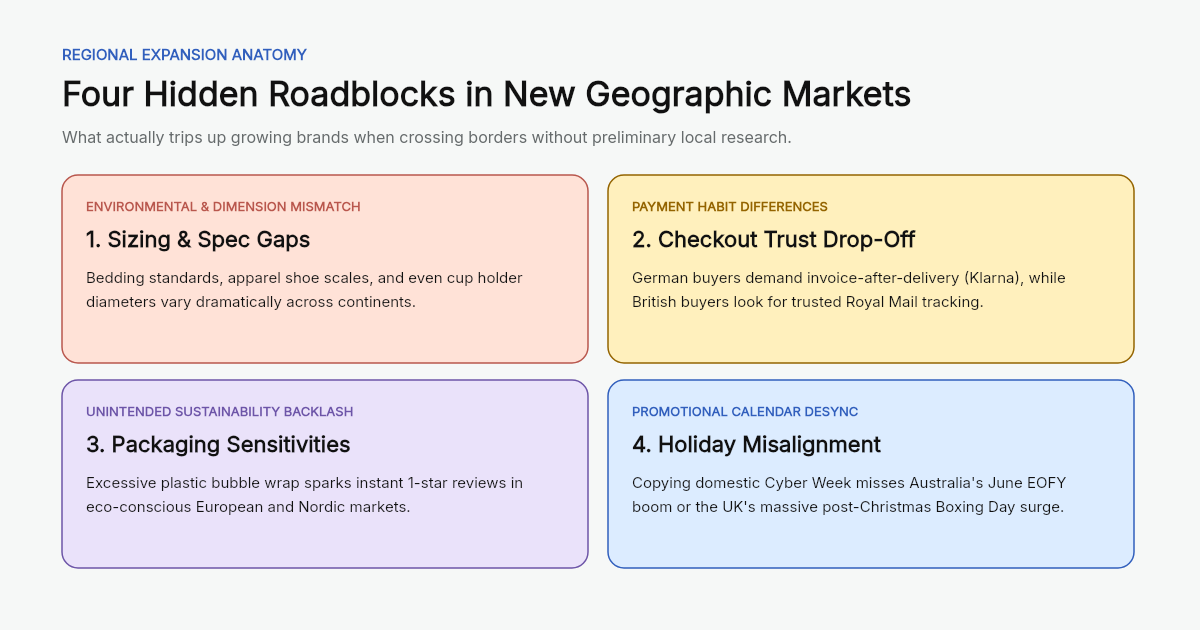 Figure 1: The four hidden regional friction points that trip up growing brands expanding into new geographic territories.
1. Sizing, Measurements, and Everyday Living Spaces
Everyday physical environments vary dramatically between regions:
- The Truck vs. Hatchback Cup Holder Trap: A popular US drinkware brand launched in Western Europe with heavy influencer spend, only to face massive returns. The base diameter of their mug fit seamlessly into American full-size pickup trucks, but was too wide for the compact consoles of European hatchbacks.
- Metric and Sizing Standards: It goes beyond converting inches to centimeters. European bedding standards differ completely from American Queen or King dimensions, and apparel shoe widths vary by region.
2. The Checkout Trust Drop-Off
American shoppers gladly type credit card numbers into clean Shopify checkouts. But take that same page to Germany, and over 40% of shoppers bounce if you do not offer invoice-based payment options (like Klarna Pay After Delivery) or direct bank transfers.
In the UK, buyers look for familiar courier badges. If your shipping method shows a generic foreign tracker instead of Royal Mail Tracked 48 or DPD, buyers immediately suspect customs delays and close the tab.
3. Sustainability and Packaging Sensitivities
In the Nordics, the UK, and Germany, consumers have a zero-tolerance policy for excessive plastic waste. If a delicate item arrives encased in three layers of non-recyclable plastic bubble wrap, happy customers will snap a photo and shame the brand on local forums for irresponsible packaging.
4. Promotional Calendar Desynchronization
Do not assume every market shops on your domestic holiday schedule:
- In Australia, the single biggest retail surge of the year happens in June during the End of Financial Year (EOFY) sale, not in late November.
- In the UK and Commonwealth countries, Boxing Day (December 26) often outperforms Black Friday for high-ticket clearance purchases.
- Launching ad spend against your domestic holiday calendar burns cash during local quiet periods.
2. The Desk Detective Method: 4 Steps to Map Local Habits for Free
Any growth lead or in-house market research analyst can uncover these nuances from their laptop using four accessible data sources:
Step 1: Mine Local Reddit Threads and Regional Review Boards
Local shoppers rarely complain in polished PR surveys, but they are brutally honest in community forums:
- Where to look: Explore country-specific subreddits like
r/AskUK,r/ausfinance,r/germany, orr/eCommerce. Inspect regional review domains likeuk.trustpilot.comorproductreview.com.au. - What to search: Look up competitors already operating in that country using high-friction queries:
[Competitor] shipping to UK import tax surprise[Brand] return shipping cost nightmare Australia[Product category] sizing runs small UK
- What you learn: You will immediately uncover what locals despise about existing foreign imports: unexpected import VAT bills, slow customs clearance, and expensive return labels.
Step 2: Use AI to Cluster Unfiltered Local Feedback
Gather 40 to 50 raw customer reviews and forum snippets from the target country. Run them through a structured AI analysis prompt:
*"Act as an experienced retail and consumer intelligence consultant based in Target Country, e.g., the United Kingdom or Australia. Analyze these 40 raw buyer reviews concerning imported goods in our category:
- What are the top three customer deal-breakers (e.g., surprise customs fees, non-local return addresses, misleading sizing)?
- What are the baseline expectations for delivery windows and customer support responsiveness?
- Provide five specific trust badges or checkout guarantees we must display on our landing page to reassure local buyers."*
Step 3: Consult Free Government Trade Guides
Few commercial teams take advantage of official trade resources. Agencies like the U.S. Commercial Service (trade.gov) and the UK Department for Business and Trade publish comprehensive Country Commercial Guides for free online.1
These reports detail per-capita disposable income, statutory consumer return laws (such as the EU's mandatory 14-day cooling-off period), and exact breakdowns of local payment preferences. They are far more reliable than expensive, syndicated slide decks.
Step 4: Align With Local Promotional Rhythm on Google Trends
Navigate to Google Trends and filter results specifically by your target country and sub-region:
- Compare search volume across twelve months for your core product keywords.
- Identify the exact weeks when purchase intent spikes locally.
- Schedule your inventory and regional campaign spend 30 to 45 days ahead of that local peak.
3. The Lean Market-Entry Readiness Checklist
Before allocating budget to an international launch, verify that your customer journey passes this simple regional stress test:
| Audit Category | What to Verify | The Lean Localization Standard |
|---|---|---|
| Spelling and Metrics | Language conventions and dimensions | Use regional spelling (e.g., colour, optimise) and display metric units first (cm, kg, litres). |
| Taxes & Landed Cost | DDP (Delivered Duty Paid) vs DDU | Always calculate and charge VAT/duties at checkout. Never let a courier demand extra tax at the buyer's doorstep. |
| Return Handling | Local reverse logistics | Partner with a regional return hub or consolidation address. Never force buyers to pay $40 to ship returns back overseas. |
| Trust Badges | Familiar local logistics and payment icons | Prominently display local payment badges (Klarna, iDEAL) and recognized domestic couriers (Royal Mail, Australia Post). |
Listening Locally Beats Spending Blindly
Expanding into new geographic territories does not require retaining costly market research services or guessing in the dark.
In the modern era of marketing research and competitive intelligence, the brands that scale sustainably across borders are not the ones with the largest ad budgets. They are the ones humble enough to listen to local buyers, respect regional habits, and eliminate friction before asking for the sale.
By combining public community signals, localized search intent, and smart consumer research, you can enter any new market with clarity, confidence, and genuine local trust.
Sources and date notes
Notice and fair use statement: Regional case studies, trade research guidelines, and consumer behavior benchmarks referenced in this guide are derived from public documentation and anonymized community insights. All trademarks, company names, and logos belong to their respective corporate entities.
Disclaimer
This article is intended for regional market analysis, localized customer discovery methodology, and operational planning reference only. Organizations should consult licensed local legal, tax, and customs professionals prior to executing international commercial expansions.
CTA
Ready to map regional consumer intent and evaluate international competitors without burning your budget? Discover how ResearchMaster AI uncovers multi-source local signals and source-backed market evidence.
Footnotes
- U.S. Commercial Service & International Trade Administration (ITA), A Practical Guide to International Market Research for Growing Brands, accessed October 2026. ↩