Google Gemini can turn a broad question into a readable briefing in minutes. Research Master takes a different route: it turns the question into a research workflow, with sources, cross-checks, limitations, and outputs that a team can review together.
Neither approach is automatically better. They are useful at different points in the work.
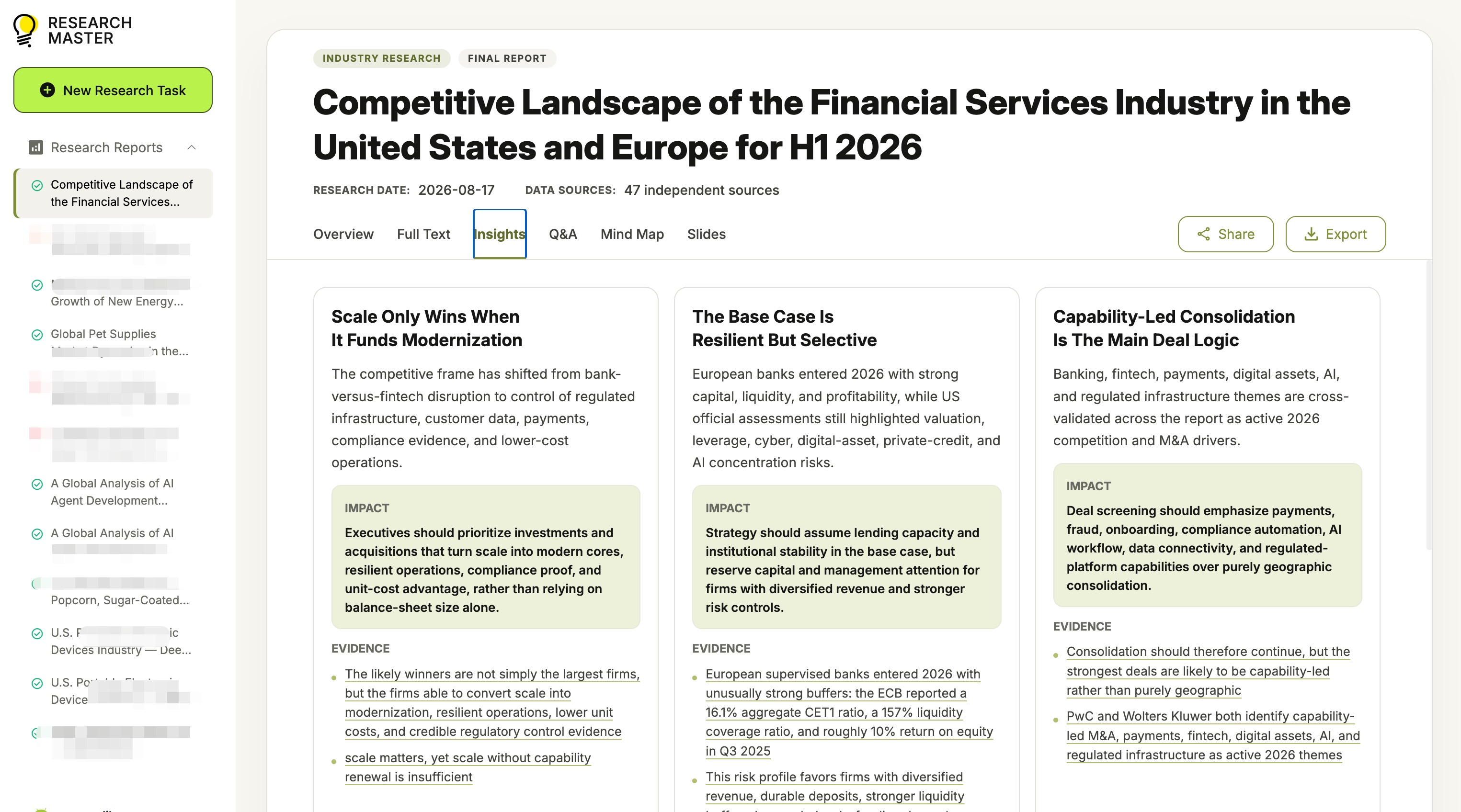
To make that difference concrete, we looked at two reports on H1 2026 financial services. The Gemini example was a compact industry summary with a trend table and sector takeaways. The Research Master example was a longer report on financial services competition in the United States and Europe, with 47 independent sources, numbered citations, evidence links, research limitations, and recommendations.
This is not a benchmark of model accuracy. The two reports do not cover exactly the same geography or use exactly the same research scope, so it would be misleading to declare one set of figures "right" and the other "wrong." The comparison is about the job each output can do after it is generated.
The short answer
Use Google Gemini when you need to get oriented quickly. It is a strong choice for a first briefing, a rough outline, or a quick explanation before a meeting.
Use Research Master when the research needs to travel. If a founder, product manager, operator, analyst, client, or investor will ask where a claim came from, an AI market research tool needs to do more than produce polished prose. It needs to make the evidence, assumptions, and gaps easier to inspect.
| Question | Google Gemini | Research Master |
|---|---|---|
| Best use | Fast orientation and first-pass synthesis | Verified market research and structured analysis |
| Starting point | A conversational research request | A topic, URL, file, company, market, or research brief |
| What the reader sees first | A concise answer, summary, or trend table | A research report organized around the decision and evidence |
| Source handling in this case | The provided sample did not display per-claim source links or citation numbers | 47 independent sources, numbered citations, and evidence links in the report |
| Handling uncertainty | The reader may need to investigate definitions and figures separately | Research limitations and cross-checks are part of the report |
| Output formats in this case | A report that can be refined in the Gemini workspace | Full text, insights, Q&A, mind map, slides, and source appendices |
| Better fit | Learning the shape of a market | Market validation, competitive analysis, industry research, overseas market research, and investment research |
What Gemini did well in the financial services example
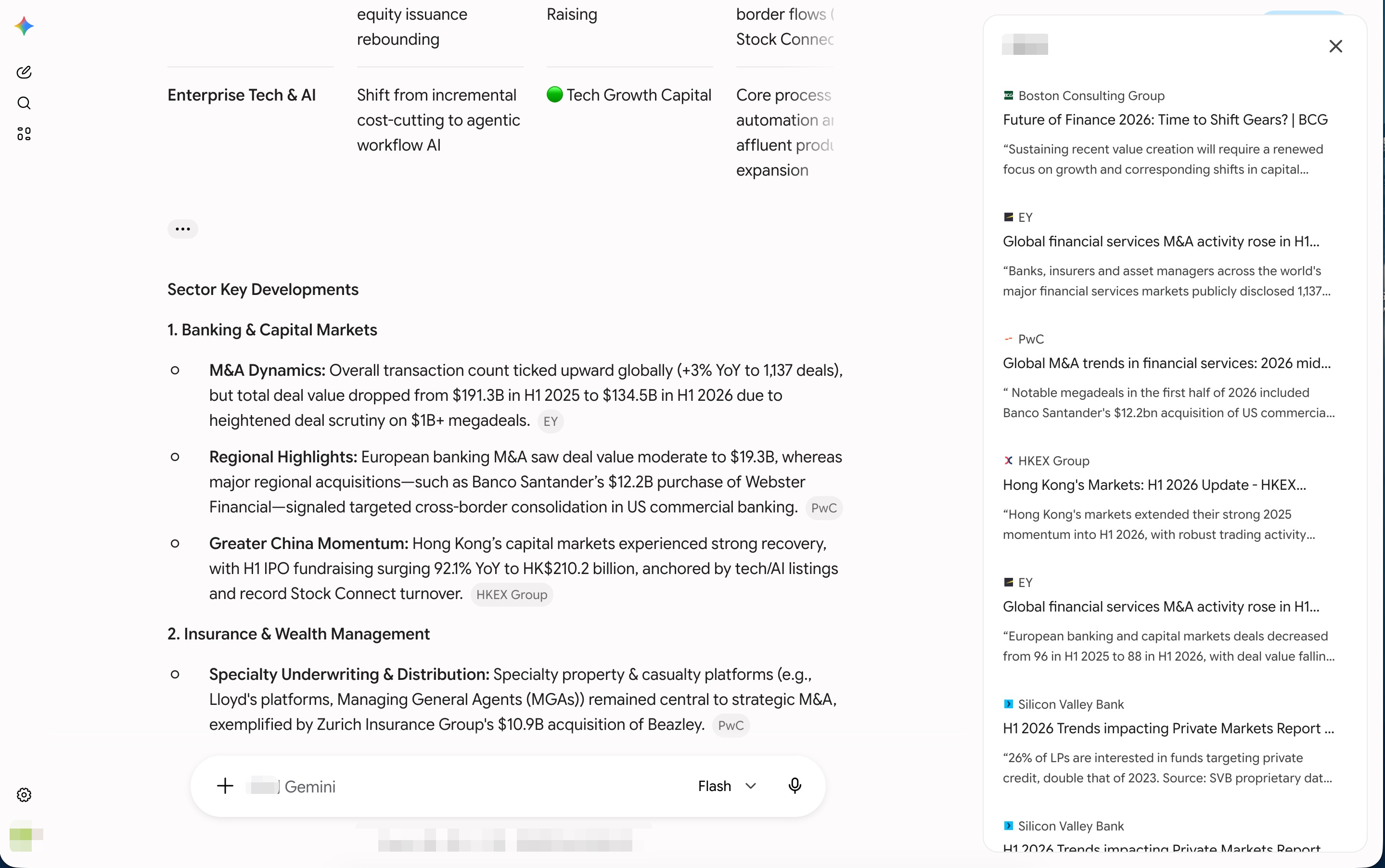
The Gemini report was easy to scan. Its executive summary table covered global M&A, private markets, capital markets, and enterprise AI. The report then moved through banking, insurance, wealth management, private credit, and strategic technology priorities.
That is useful work. A reader could quickly take away that deal volume and deal value were moving in different directions, private credit was drawing attention, equity issuance was recovering in parts of Asia-Pacific, and financial institutions were moving beyond basic productivity tools toward agent-led workflows.
For early research, that clarity matters. Gemini Deep Research is designed to browse the web and, with user permission, draw context from Gmail, Drive, and Chat before creating a report. That makes it especially useful when an individual needs to combine public information with their own working materials.
The limitation is not that a short report is bad. The limitation appears when the report becomes an input to a real decision. A statement such as "private credit interest doubled" or "M&A value fell by about 30%" immediately raises practical questions:
- Which source produced the number?
- Is the figure global, regional, or limited to a specific segment?
- Are the time periods and definitions comparable?
- Is this a confirmed fact, a directional estimate, or an interpretation?
The Gemini sample supplied for this comparison did not show those answers alongside each claim. That does not prove the claims are incorrect. It means the reader needs another step before relying on them in a market-entry plan, an investment memo, or a leadership discussion.
What Research Master added
The Research Master report did not begin and end with a summary. It framed financial services as a competition across regulated infrastructure, funding, payments, customer data, fraud controls, onboarding, compliance, and AI-enabled operations.
It then separated the work into industry structure, competitive positioning, regulatory and macro risk, technology and capital markets, integrated cross-checks, limitations, and recommended actions. This structure matters because financial services is not one market with one growth rate. Bank balance sheets, payment rails, private credit, wealth management, and fintech infrastructure respond to different pressures.
The report also made the evidence trail visible. In the public example, a claim about European bank resilience points to cited data and an evidence link. Other claims connect to materials from bodies and publishers such as the ECB, IMF, FSOC, EY, and PwC. The report also includes source-reference pages and a referenced-media summary.
Visible sources are not a guarantee that every conclusion is correct. A cited source can be outdated, too broad, or poorly matched to a claim. The point is more practical: Research Master gives the reader a place to start checking. It keeps the path from conclusion back to evidence open.
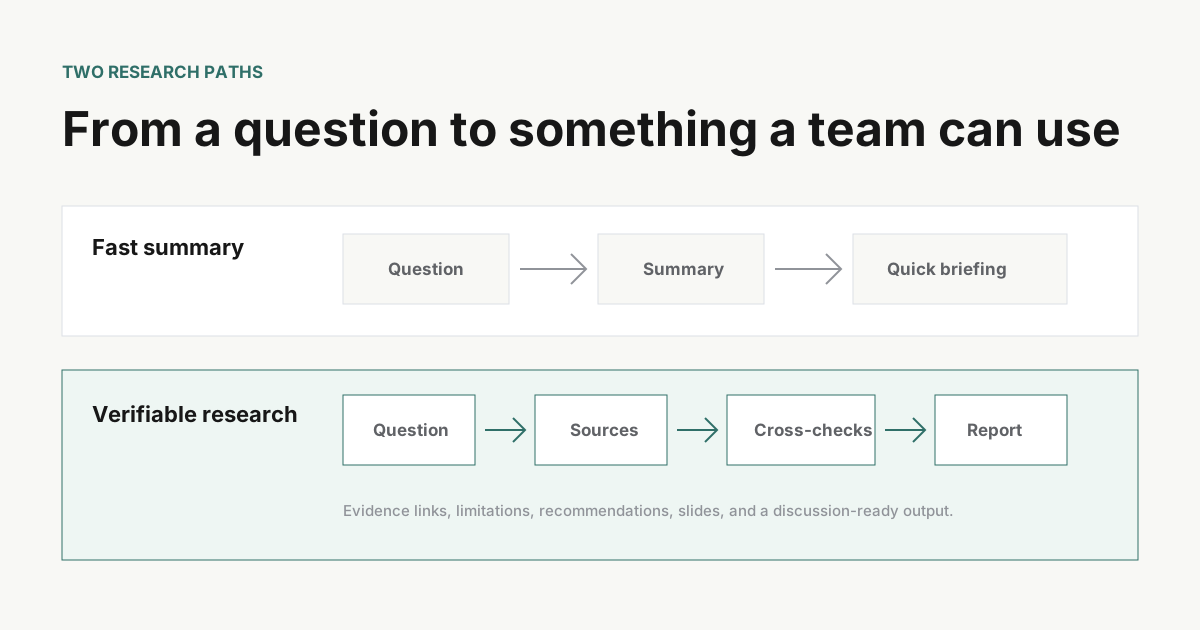
A fast answer helps a reader get oriented. A research workflow keeps the answer connected to evidence, limits, and next steps.
Why source verification changes the quality of industry research
In ordinary reading, an industry report can sound convincing without being useful. It may say that a market is growing, that AI adoption is accelerating, or that consolidation is likely. Those statements only become actionable when the reader can see what they mean for a particular market, customer group, or business model.
That is why source verification is more than a list of links at the end of a page. It is the process of matching a claim to an appropriate source, checking whether definitions align, and making uncertainty visible instead of smoothing it away.
In the financial services case, a useful research workflow needs to distinguish between questions such as:
- Are banks financially resilient, and by which capital or liquidity measure?
- Is M&A activity increasing in transaction count, transaction value, or both?
- Which parts of private markets are attracting new capital, and why?
- Does AI change a bank's cost base, customer experience, risk controls, or all four?
One source rarely answers all of these questions well. Official statistics may be best for capital and regulatory conditions. Company disclosures may show operating performance. Industry reports may explain deal activity. A good industry research report brings those source types together without pretending they are interchangeable.
For a deeper look at this approach, see our guides to choosing an AI market research tool and building market research frameworks for AI-assisted decisions.
The practical difference: an answer versus a research asset
The output format changes what a team can do next.
Gemini keeps research in a flexible assistant workflow. You can ask follow-up questions, refine the report, or turn it into interactive content in Canvas. That works well when the goal is to learn, explore, or prepare a first draft.
Research Master is designed for the point at which the work needs to be shared and checked. In the financial services example, the report is available as full text, key insights, Q&A, a mind map, and slides. The same research can move from detailed reading to a team discussion or executive presentation without starting from scratch.
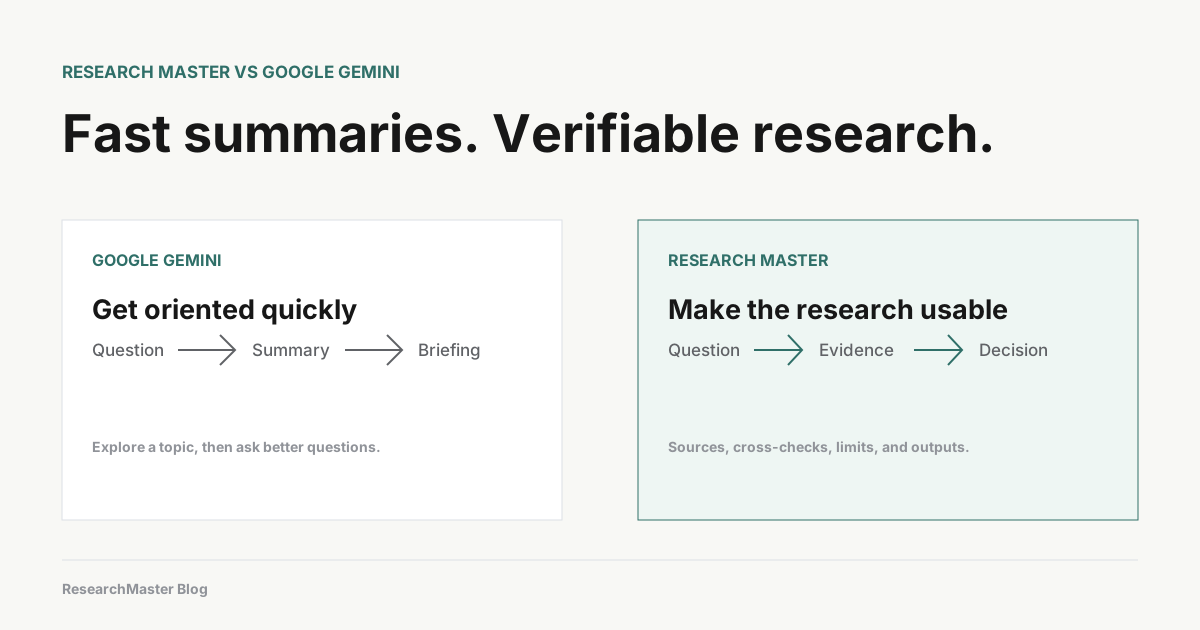
Research Master turns a research question into a report that can be reviewed, presented, and revisited as new evidence appears.
When should you use Google Gemini?
Google Gemini is a good fit when speed and breadth matter more than a formal research deliverable.
- You need a quick briefing before a call.
- You are entering a new topic and need a plain-English overview.
- You want to brainstorm report sections or follow-up questions.
- You need to combine authorized material from Gmail, Drive, or Chat with web research.
- You are still deciding whether a topic is worth deeper investigation.
In these situations, the goal is orientation. A concise answer is often exactly what you need.
When should you use Research Master?
Research Master is a better fit when the work must support a decision that other people will challenge, extend, or revisit.
- A founder is validating whether a product idea has real market demand.
- A product manager is comparing competitors, alternatives, pricing, and buyer signals.
- An overseas operator is assessing a new country before expansion.
- An analyst needs an industry research report with cited sources and clear limitations.
- An investor or strategy team is preparing an investment research or due-diligence brief.
- A team needs to turn topics, URLs, and files into source-backed decisions.
The benefit is not simply a longer report. It is less rework after the report arrives. Instead of reopening every question when someone asks about a number or assumption, the team has a visible research path to inspect.
A better way to use both tools
Many teams will get the best result by using both tools at different stages.
Start with Gemini to explore a broad space, identify the language people use, and form better questions. Then use Research Master when you need to define the research boundary, compare sources, test assumptions, and create a decision-ready report.
That sequence respects what each product does well. It also avoids a common mistake: treating a polished first answer as finished market research.
For a report that needs to support a board discussion or client decision, see how to turn raw sources into board-ready research.
Final takeaway
Google Gemini makes it easier to start researching. Research Master makes it easier to carry research through to a defensible conclusion.
If you need a fast summary of a complex industry, Gemini is a sensible place to begin. If you need verified market research with source verification, cited sources, explicit limitations, and multiple ways to share the result, Research Master is built for the next stage.
The difference is not fast versus slow. It is whether the final output only explains a market, or helps a team decide what to do about it.