Market research often feels slow because the information is scattered. Competitor websites change, customer feedback accumulates, new reports appear, and internal notes sit across documents, spreadsheets, and meeting records. By the time a team has collected everything manually, the question it started with may have changed.
AI can make the first stage of market and industry research much faster. It can scan public material, organize recurring themes, surface changes, and draft an initial research structure. The useful part is not getting more text. It is getting from a business question to a workable evidence base sooner.
That still requires judgment. A fast summary is not automatically a reliable conclusion. Important claims need a relevant source, comparable definitions, and a clear connection to the decision the team is trying to make.
The short answer
To start market and industry research quickly, define the decision first, add the business material you already have, gather the public evidence that can test your assumptions, and separate confirmed facts from questions that still need review. AI is most useful for the repeated work of finding, reading, grouping, and summarizing information. Your team should stay responsible for the scope, the evidence behind high-impact claims, and the final decision.
What is AI market and industry research?
AI market and industry research uses machine learning, natural language processing, and automation to help collect, organize, and analyze market information. It can monitor competitor pages, classify large volumes of customer feedback, identify recurring topics in news or search activity, and turn scattered material into an initial research brief.
For example, a team can use AI to notice that a competitor has changed its pricing page, group support tickets around a repeated customer complaint, or compare how several companies describe a similar product category. The point is not to replace the researcher. It is to reduce the manual work that delays the first useful view of a market.
What AI can help with in market research
| Research task | What AI can help organize | What the team still needs to judge |
|---|---|---|
| Competitor monitoring | Pricing pages, product updates, messaging, and visible changes | Which change matters for your customers or strategy |
| Customer feedback analysis | Themes across reviews, interviews, surveys, and support records | Whether a theme is representative and what action it requires |
| Trend discovery | News, search activity, social discussion, and industry signals | Whether the signal is durable, relevant, and material |
| Market sizing and benchmarking | Public indicators, company information, and comparable segments | Definitions, timing, regional differences, and source quality |
| Industry research | Market structure, participants, regulations, risks, and evidence | The conclusion and the decision it should support |
The advantage is speed and scale. The limit is context. A tool can group ten thousand comments, but it cannot decide on its own whether a complaint reflects a product flaw, a pricing issue, a poor-fit customer segment, or a temporary event.
How to start market and industry research quickly
1. Start with a decision, not a broad topic
“Research the market” is too open to produce a useful output. Rewrite the task as a decision question instead:
- Is this market worth entering?
- Which competitors are affecting our target customer most?
- What is changing in this industry, and does it alter our product plan?
- Why do customers choose an alternative or leave our product?
- Which country or segment should we investigate first?
The question determines which sources matter, which data should be compared, and what the final report needs to say.
2. Bring in the material your team already has
Public search is only one part of the picture. Sales reviews, customer interviews, product briefs, prior reports, competitor notes, and meeting records often contain the business context that public sources cannot provide.
Start by adding the files that are closest to the decision. They show what the team already knows, which assumptions need testing, and where public research can add useful context rather than duplicate internal work.
3. Use a simple research frame
Most early market and industry research can begin with five areas:
- Market: size, growth, regions, and major changes
- Customer: target segments, buying triggers, pain points, and feedback
- Competition: companies, positioning, pricing, products, and channels
- Environment: regulation, technology, supply, macro conditions, and risk
- Decision: opportunity, constraints, assumptions, and the next action
This prevents research from becoming a collection of links with no clear purpose.
4. Verify the claims that could change the decision
Not every line needs the same level of review. Focus first on the figures, market claims, competitor statements, and customer assumptions that would change what the team does next.
Check whether a source is current, whether its definitions match the question, and whether a claim applies to the right region, segment, or time period. When sources disagree, keep the difference visible instead of forcing a single clean answer.
5. End with a next step, not only a report
A useful first output should answer three things: what matters now, what it means for the business, and what needs to happen next. That can be a deeper customer interview, a competitor test, a country-level analysis, a product decision, or an investment question to investigate further.
How to choose an AI tool for market research
The best tool depends on the task. A team monitoring competitors does not need the same workflow as a team preparing an industry report or enriching sales leads.
| Evaluation area | Questions to ask |
|---|---|
| Research goal | Do you need monitoring, data collection, feedback analysis, market analysis, or a source-backed report? |
| Data sources | Can the tool work with websites, public sources, and the local files that contain your context? |
| Source verification | Can the team inspect where important external claims came from? |
| Output | Does it produce the format people need, such as a report, table, brief, slides, or shared workspace? |
| Workflow fit | Can non-technical team members use it, review it, and act on the result? |
| Privacy and compliance | Does it fit your requirements for customer, company, and internal data? |
6 AI tools for market research worth evaluating in 2026
No single product covers every research job. The tools below are useful for different parts of the work, from competitor monitoring and web data collection to source-backed market research.
Crayon: competitor intelligence and change monitoring
Crayon is suited to teams that need to keep track of competitor activity over time. Its focus is on organizing competitive signals that can support product, marketing, and sales conversations.
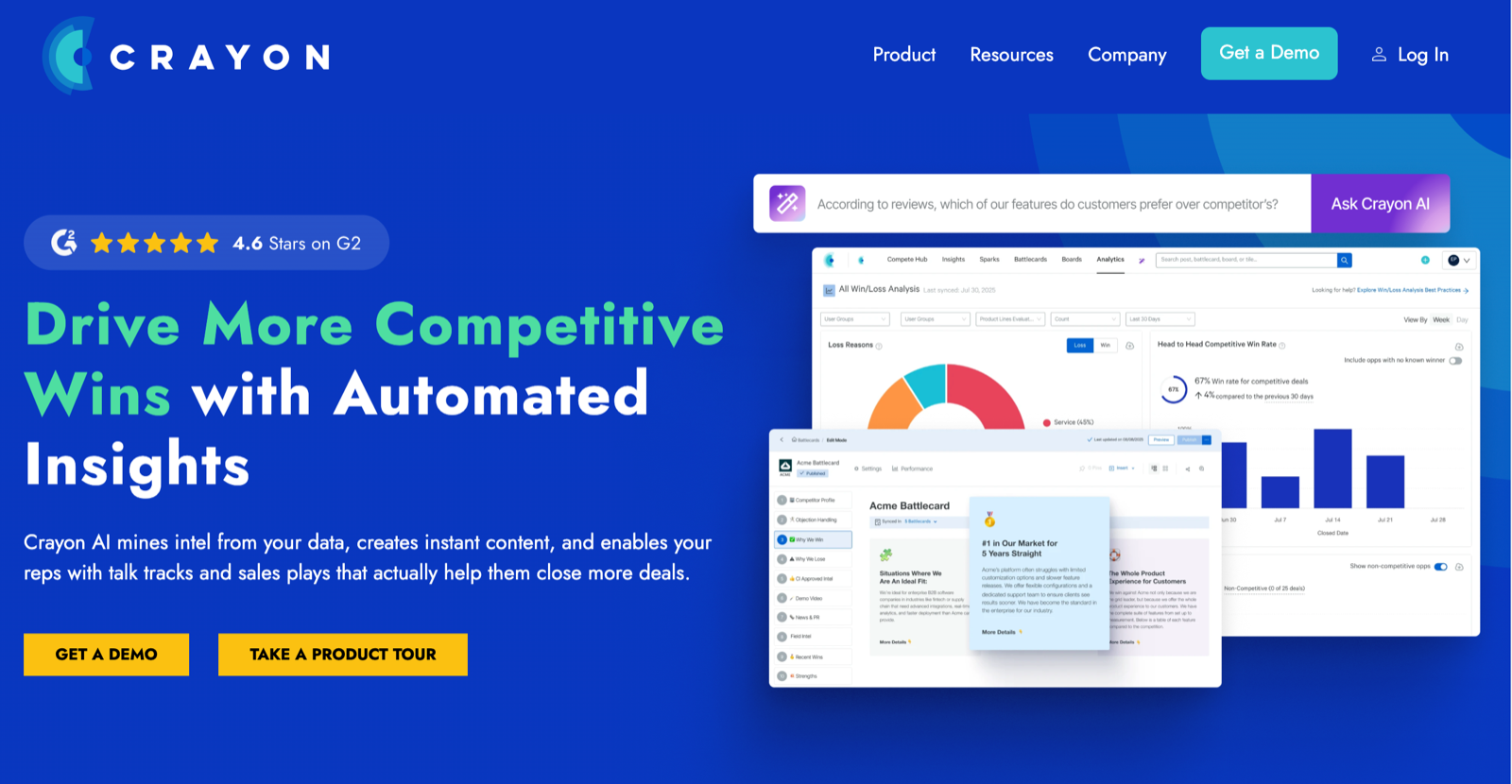
Use this type of tool when the question is “What changed at a competitor?” rather than “What does the industry evidence mean for our next decision?”
ResearchMaster: verified market and industry research
ResearchMaster is an AI market research tool for teams that need a research result they can inspect, discuss, and reuse. It starts with a topic, company, URL, or local files, then brings together relevant sources, cross-checks important information, and organizes the output around a business question.
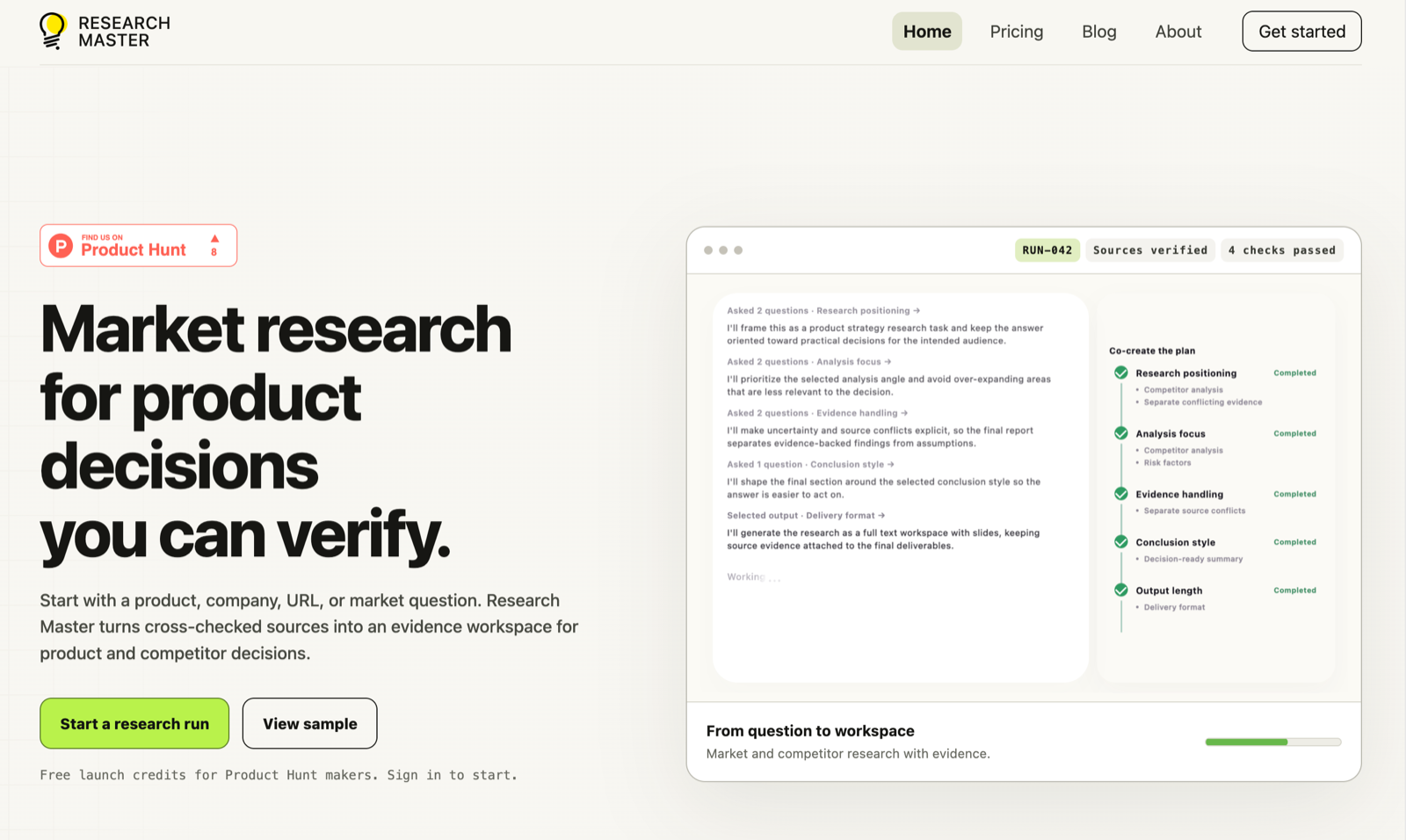
It is a good fit for market validation, competitive analysis, industry research, overseas market research, and investment research when a polished answer alone is not enough. Source verification, cited sources, and explicit limitations help the reader understand what supports a conclusion and what still needs review.
Thunderbit: web data extraction for sales and operations
Thunderbit is focused on extracting structured information from public webpages. It can be useful when a research task begins with product listings, public pricing, company directories, or other web pages that would otherwise require repeated manual copying.
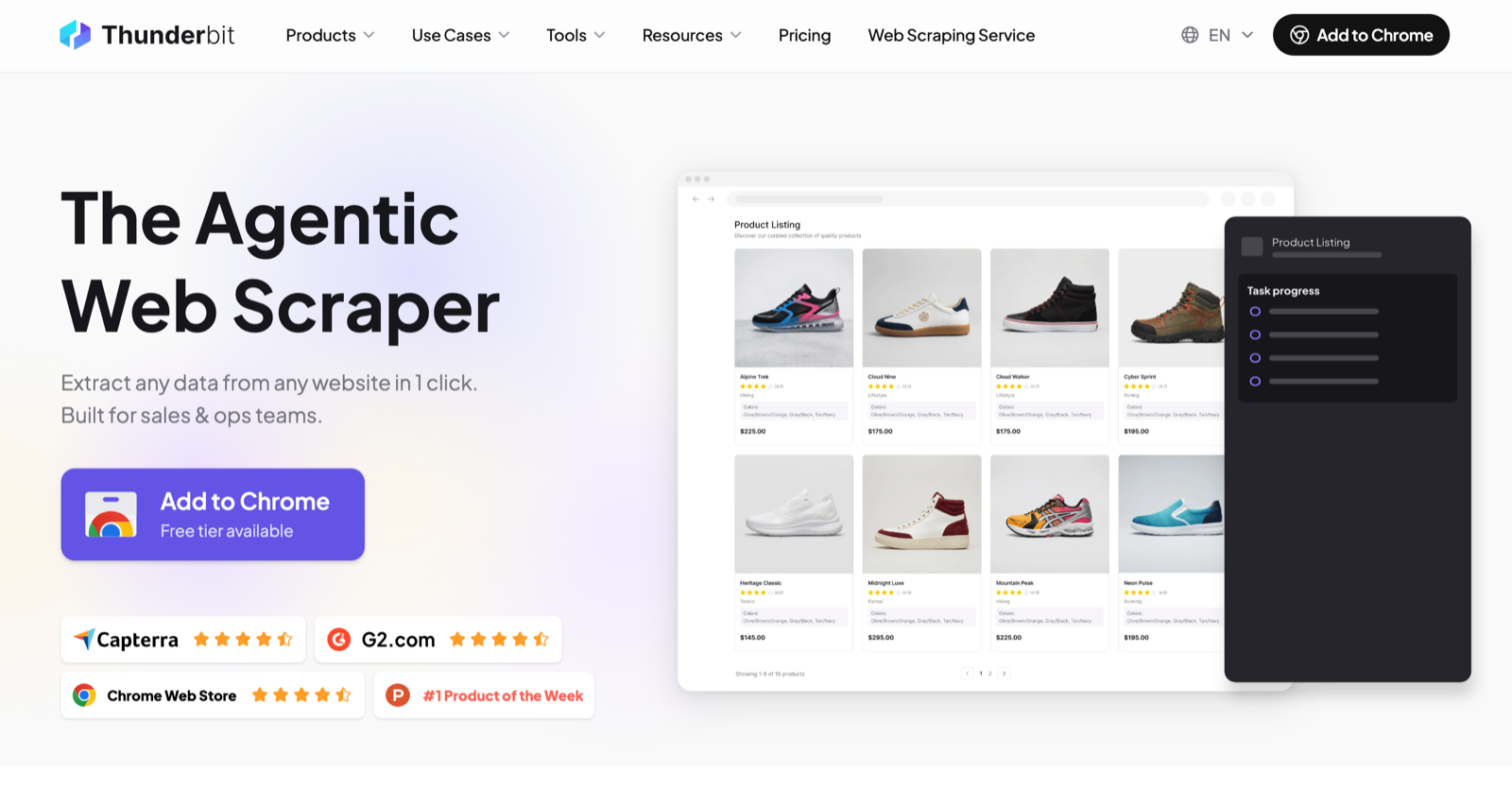
It can provide useful raw material for competitor research, market lists, and public-data collection. The extracted data still needs context, source checks, and a clear link to the decision being made.
Clay: company and lead research workflows
Clay is often used for company research, data enrichment, and go-to-market workflows. It is useful when sales or growth teams need to assemble better company and contact context before prioritizing accounts or planning outreach.
This is closer to sales and growth infrastructure than a complete industry research workflow. It is most useful when the research goal is to understand or prioritize companies and potential buyers.
Releasenote.ai: product updates made easier to share
Releasenote.ai is more focused on turning product and engineering updates into readable release information. For product teams, it can help make development work easier for customers, sales teams, and internal stakeholders to understand.
It is not a broad market research platform, but it can be useful when release signals and product changes need to become part of competitive or customer communication.
Semrush Market Explorer: digital market and traffic signals
Semrush Market Explorer is useful for understanding a market through website traffic, digital channels, and online competitors. It can help teams identify visible market participants, compare online performance, and find audience or growth signals.
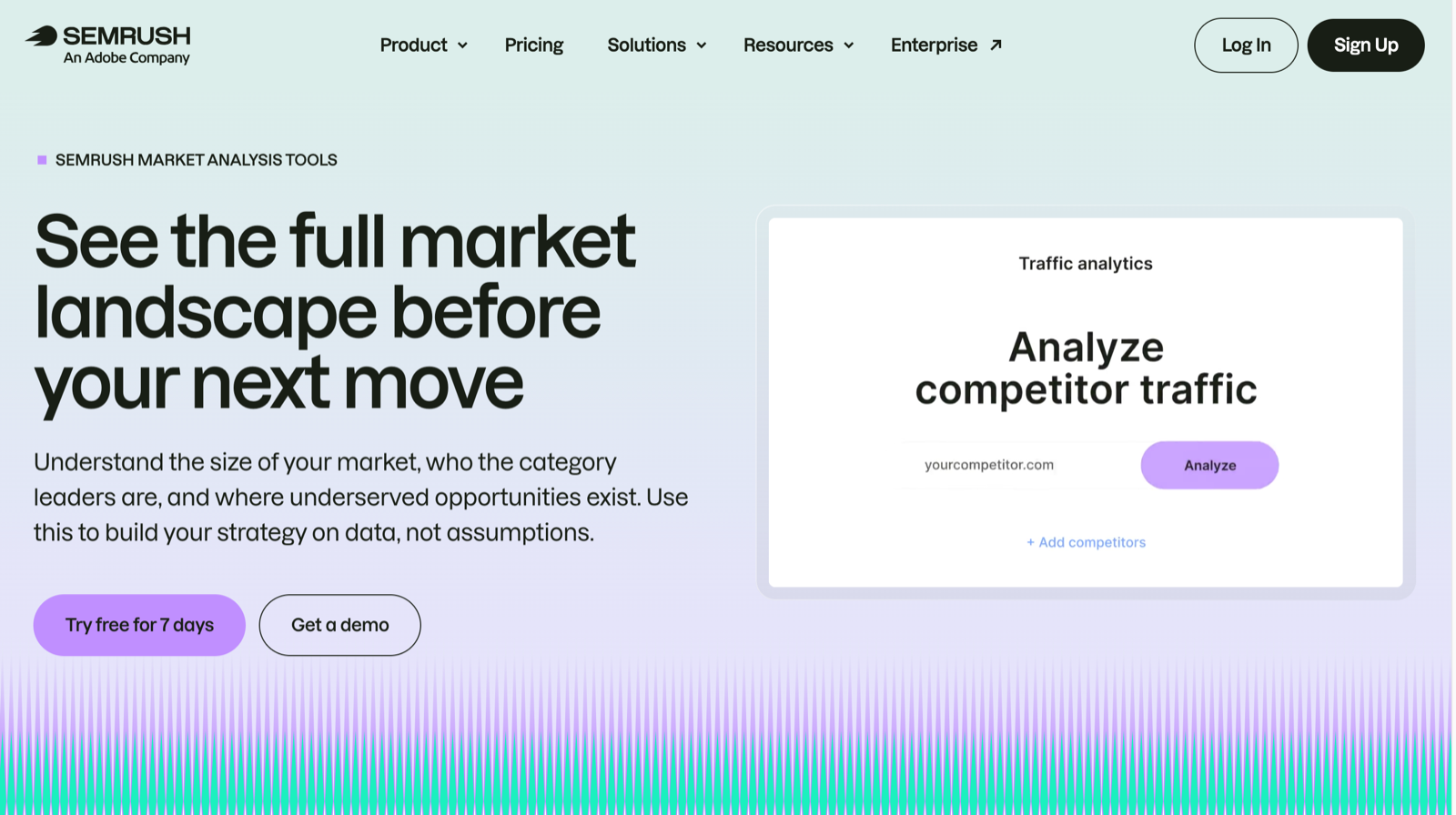
Traffic data is an important signal, but it is not the same as market size or business performance. Use it alongside customer, company, and industry evidence before drawing a strategic conclusion.
Choose the AI tool that fits your research task
The right tool is not necessarily the one with the longest feature list. It is the one that fits the business question, the evidence you have, the sources you need, and the way your team makes decisions.
Use monitoring and extraction tools when you need an early signal or a structured dataset. Use sales and enrichment tools when you need company context and a stronger account workflow. Use a verified market research workflow when the work must support a product decision, market-entry discussion, competitor analysis, or investment case.
For a deeper comparison of the source-verification criteria that matter in an AI market research tool, read How to Choose an AI Market Research Tool. If internal materials are central to the work, see How to Turn Local Files Into a Verified Industry Report.
A short research brief you can use today
Research market or industry to support product decision, market entry, competitor analysis, or investment question. Focus on customer group, region, competitors, and time period. Use the attached internal material and relevant public sources. Separate confirmed facts, inferences, and assumptions that still need validation. Cite the sources behind important external claims, then summarize the opportunity, risks, and recommended next steps.
Final takeaway
AI lowers the cost of starting market and industry research. It can help teams move through repetitive collection, reading, and organization work faster. The value comes from what happens next: defining the right question, verifying what matters, and turning the evidence into an action a team can defend.